Origami Paper Types: What Makes a Good Origami Paper

I’ve spent countless hours folding cranes, fans, and other decorative forms, and I can tell you that not all paper is created equal. Some sheets hold a crease like a dream. Others tear at the slightest wrong move! Whether you’re just starting out or you’ve been folding for years, understanding the different origami paper types is game-changing. In this guide, I’ll walk you through what makes a good origami paper and help you find the perfect match for your next project, especially if you’re folding for wearable art, like we do at Kamyi.Art.
What Makes a Good Origami Paper?
When you’re starting your origami journey, you might think any paper will do. But trust me, the right paper makes all the difference! The best origami paper has a specific weight and thickness, which is typically 50–80 GSM (grams per square meter). This gives you that sweet spot where the paper is light enough to fold easily but strong enough to hold those crisp creases.
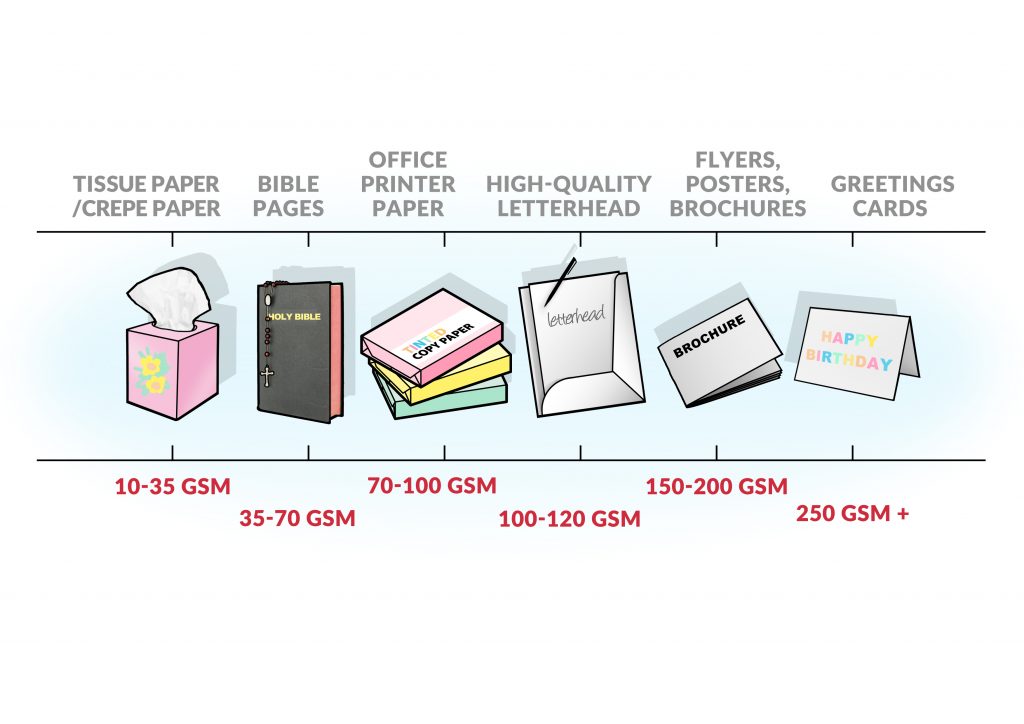 image from purely digital
Texture matters too. You want a paper that’s smooth enough to slide along itself during folds but not so slippery that your creases won’t stay put. The ideal origami paper should feel substantial without being thick or bulky—especially important for origami jewelry, which needs to be both delicate and durable.
Here’s something interesting: paper strength plays different roles depending on what you’re making. For simple models like cranes or earrings, you can use thinner, more delicate papers. But if you’re tackling complex modular forms or structural pieces, you’ll need something with more backbone that won’t tear under pressure.
The magic happens when your paper holds creases beautifully without fighting back. Good origami paper “remembers” where you folded it and stays put, creating those sharp, clean lines that make your finished model look professional and polished.
Traditional Origami Paper Types
Standard origami paper — often referred to as “kami” in Western origami communities — is probably what you’ll encounter first. While “kami” simply means “paper” in Japanese, outside Japan it’s come to mean the mass-produced, lightweight paper commonly used for origami. It’s affordable, comes in a wide range of colors, and is perfect for learning. At around 60 GSM, it’s forgiving enough for beginners but strong enough for most basic projects. You can find it in craft stores and online, making it super accessible.

origami paper pack from FLAX art & design
Washi paper is where things get exciting. This traditional Japanese paper has incredible character with its subtle texture and impressive strength. It’s made using natural fibers like kozo (mulberry), giving each sheet a unique feel. While it costs more than standard paper, it handles complex folds beautifully and offers a more organic aesthetic. It’s great for high-end origami art.
 washi paper making
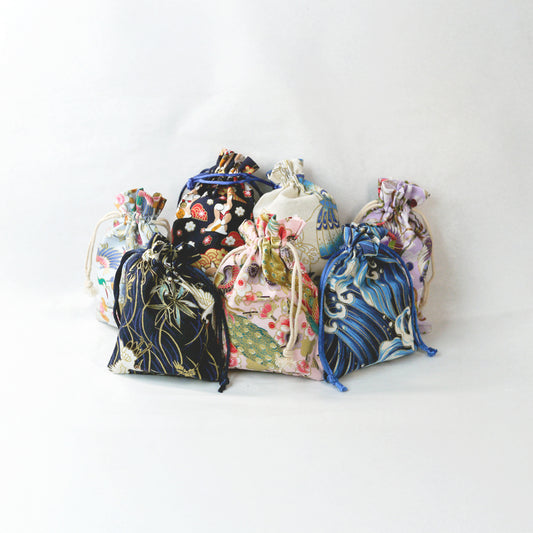
To add serious elegance to your work, chiyogami paper is your friend. These decorative sheets are printed with traditional Japanese patterns, like cherry blossoms, cranes, or waves, and layered over washi. At Kamyi.Art, we use authentic chiyogami sourced from Kyoto in many of our jewelry designs because it offers both beauty and strength in small, wearable formats. Just note that chiyogami tends to be a bit thicker, so it’s best suited for simple-to-intermediate models with fewer layers.

Shopping for Chiyogami in Kyoto
Specialty Papers for Advanced Folding
Ready to level up? Foil and metallic papers might seem tricky at first, but they’re fantastic for complex models. They hold incredibly sharp creases and won’t spring back like regular paper. The downside? They can tear if you’re not careful, so save them for when you’re confident in your technique.
![]()
 Foil Origami Paper
Tissue foil is the sports car of origami papers. It’s thin, lightweight, and perfect for sculptural pieces with tons of detail—especially when handmade by laminating tissue paper onto foil with glue. It’s a favorite among serious folders.
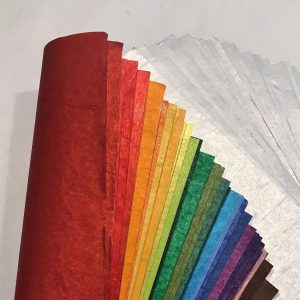
Tissue Foil from Taro's Origami Studio
Unryu paper, also called mulberry paper, is strong and beautiful with visible fibers that give it a natural look. It’s great for decorative models and also works well in shadowbox displays or hanging mobiles.

Unryu paper from kozo studio
Choosing the Right Paper for Your Project
Here’s my advice: match your paper to your ambition! Beginners should stick with standard origami paper in larger sizes (at least 6 inches square). As your skills improve, you can experiment with smaller sheets and specialty papers.
For origami jewelry like earrings, pendants, or charms, we recommend chiyogami or lightweight washi—thin enough to fold cleanly, but strong enough to wear daily. At Kamyi.Art, we coat our jewelry pieces to add durability and preserve the beauty of the folded form.

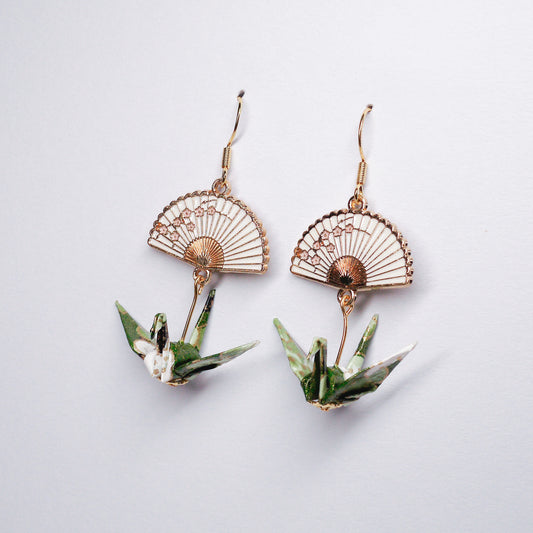
Origami Earrings made from Chiyogami by Kamyi.Art
Single-color papers are great for practice because you can see your fold lines clearly. Save the beautiful patterned papers for models you’ve already mastered and you’ll appreciate them more and avoid frustration.
Budget-wise, start with affordable options and gradually invest in premium papers as you discover what you enjoy folding most. Trust me, once you feel the difference that quality paper makes, you’ll understand why serious folders are willing to pay more for the good stuff!
FAQ: Origami Paper for Jewelry & More
Q: What’s the best paper for origami jewelry?
A: Thin but strong papers like chiyogami and washi work best because they hold creases well and pair beautifully with protective coatings.
Q: Is chiyogami paper good for folding origami earrings?
A: Yes! Its weight, durability, and vibrant patterns make it ideal for origami earrings, especially when paired with a sealing finish.
Q: Can I use regular craft paper for origami?
A: You can, but it’s often too thick or too fibrous. Standard origami paper (kami) or lightweight washi will give better results.
Q: Where do you source your paper?
A: At Kamyi.Art, we source authentic chiyogami from Kyoto, Japan, as well as suppliers in the US who import directly from Japanese paper studios.
Finding the right origami paper types truly transforms your folding experience. From classic kami to luxurious chiyogami, each paper brings something special to your creations. Whether you’re crafting a tiny crane earring or a complex modular sculpture, the right paper is the secret to clean lines and long-lasting results. Don’t be afraid to experiment! Try a few different types and see what feels right for your hands and your style.
Happy folding and may all your creases be crisp.